The Bruce Peninsula, where Roche Fleurie is located, is well-known for its flora and fauna. Because there are few people and no industry, and because agriculture is very marginal the soil being thin and poor in most places, plants and animals that are rare in other areas of Ontario are relatively common here. Some of our wild flowers, like the Trillium grandiflorum below, are to be found in many parts of eastern North America. But some others, scarce in most places, are abundant here.
Tuesday, June 4, 2013
Some Wild Flowers in Bloom in the Bruce Peninsula
The Bruce Peninsula, where Roche Fleurie is located, is well-known for its flora and fauna. Because there are few people and no industry, and because agriculture is very marginal the soil being thin and poor in most places, plants and animals that are rare in other areas of Ontario are relatively common here. Some of our wild flowers, like the Trillium grandiflorum below, are to be found in many parts of eastern North America. But some others, scarce in most places, are abundant here.
Friday, May 31, 2013
Snakes in the Garden
There are seven different kinds of snakes in the area around the house and garden. With time I should be able to show you all of them, since we have seen them all over the years. The most common is the eastern garter snake. Although they are completely harmless, I do not like to have them around as they make me jump.
| Eastern Garter Snake |
Tuesday, May 28, 2013
Bean Strategies
The vegetable I like best to grow is pole beans. I am not quite sure why, but these Jack-in-the-bean-stalk plants, which are so productive, have a definite attraction for me. The growing season is rather short in our zone 5 garden, so I have to make sure I put all the odds on my side to get as good a crop as possible and have green beans available for the longest period of time. Here is how I grow them.
| Pole beans in August |
Friday, May 24, 2013
Making Do
After three weeks of sunshine, it has now been raining steadily for three days and nights. Not only is the garden soaked, in some places the paths between the raised beds are flooded (this is the main reason why the beds are raised). Such weather provides an opportunity to do indoor jobs and perhaps some reading.
I am just as interested in gardening books as I am in gardening, and in my opinion, some of the most interesting and practical books, are the ones that were published roughly between 1930 and 1960. Read more to see why.
Tuesday, May 21, 2013
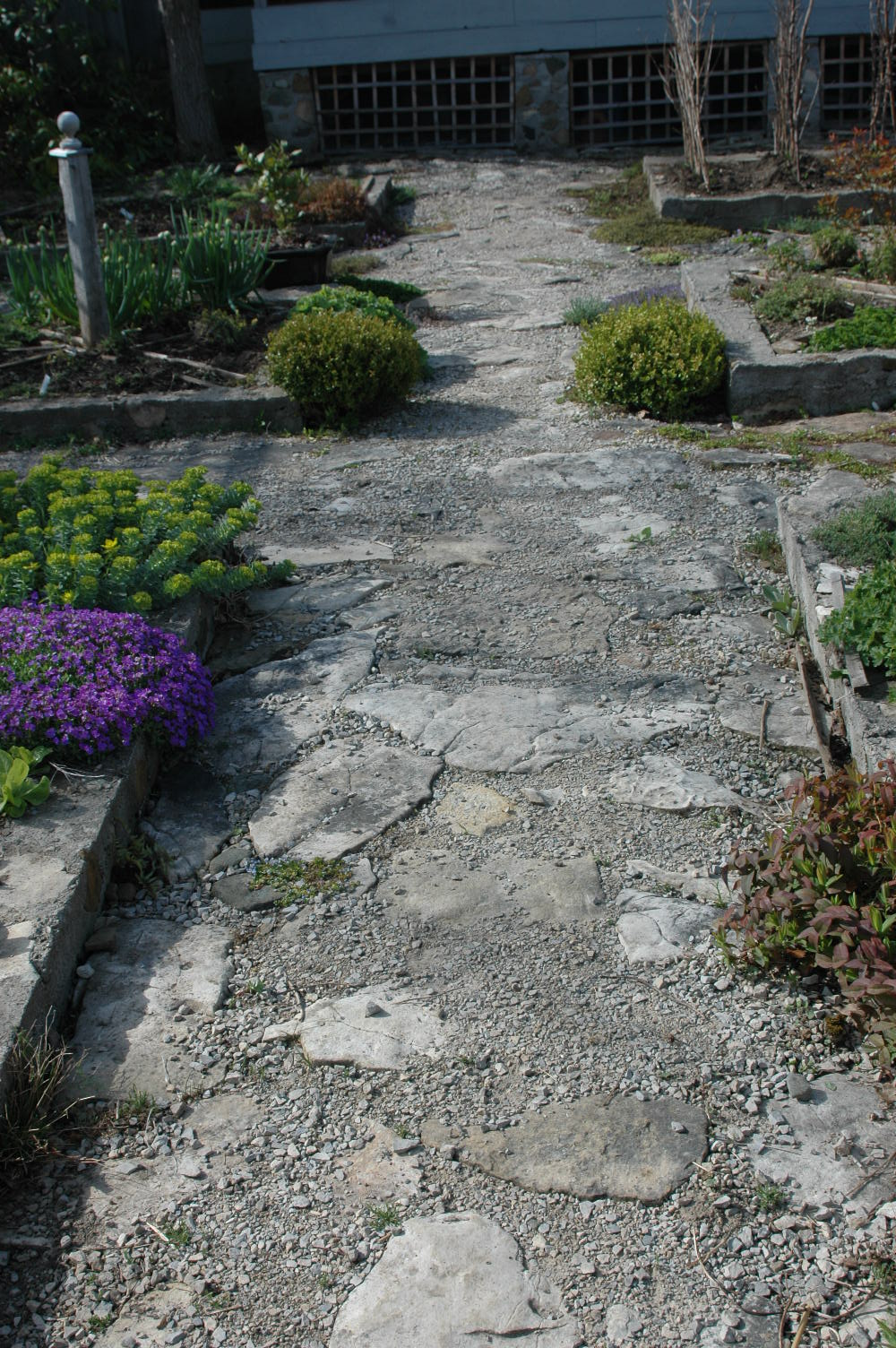
Pavement Gardening (1)
The paths between flower and
vegetable beds in this garden are paved with the local stone, Great Lakes dolomite. Tucked among these, are numerous rock garden and low growing plants. At first
glance, as in the picture below, you might not notice the many small things that
grow in between the stones. These paths are my version of a rock garden with
some tough plants you can walk on, and, congregating near the hedges, where
they are less likely to be trod upon, other slightly bigger or more fragile
plants that like a hot spot in a tight space between rocks.
Friday, May 17, 2013
Mulch & Hare
At this time of the year I do a lot of mulching with leaves. Usually our summers are hot and often dry, and mulch can make all the difference when water gets scare. This mulching also regulates the soil temperature and acts in large part as a soil conditioner and fertilizer once the leaves break down. For the strawberry plants below, the mulch also prevents the fruits getting splashed and sitting in mud when it rains.
I conclude the post with the picture of a hare.
| Strawberry plants mulched with leaves |
Tuesday, May 14, 2013
A Close Call
After over two weeks of warm and sunny weather, the last two nights have been very cold and produced a crisis of the kind northern gardeners have to face at least once most springs: a frost warning when many things are already up and growing. Our worst night was last night when the gods decided to remind us we live in Canada.
Empty pots covering plants to protect them from frost |
Friday, May 10, 2013
Ruthie
Tuesday, May 7, 2013
Potty about Pots
I have lots of pots scattered around the garden. They are very attractive, but require a fair bit of management. They have to be emptied and put away for the winter to make sure they are not broken by the frost. They have to be refilled in spring, and filling up the big ones can require a lot of “filling” which has to be bought or has to come from the garden.
Friday, May 3, 2013
Mrs Slocum Rises out of the Water
Subscribe to:
Posts (Atom)